




























































































































































































































































































How the EU AI Act Will Reshape Global AI in 2025



Europe’s new AI rules move from text to reality
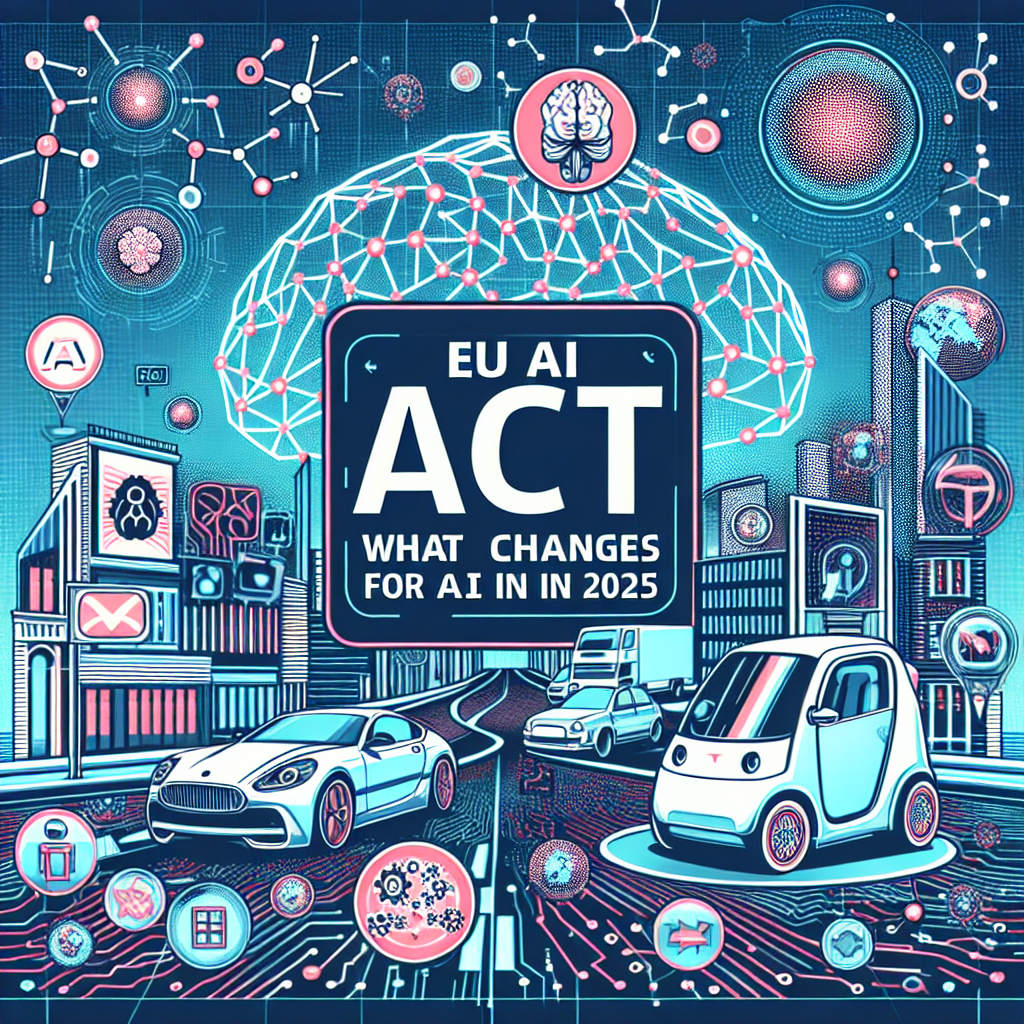
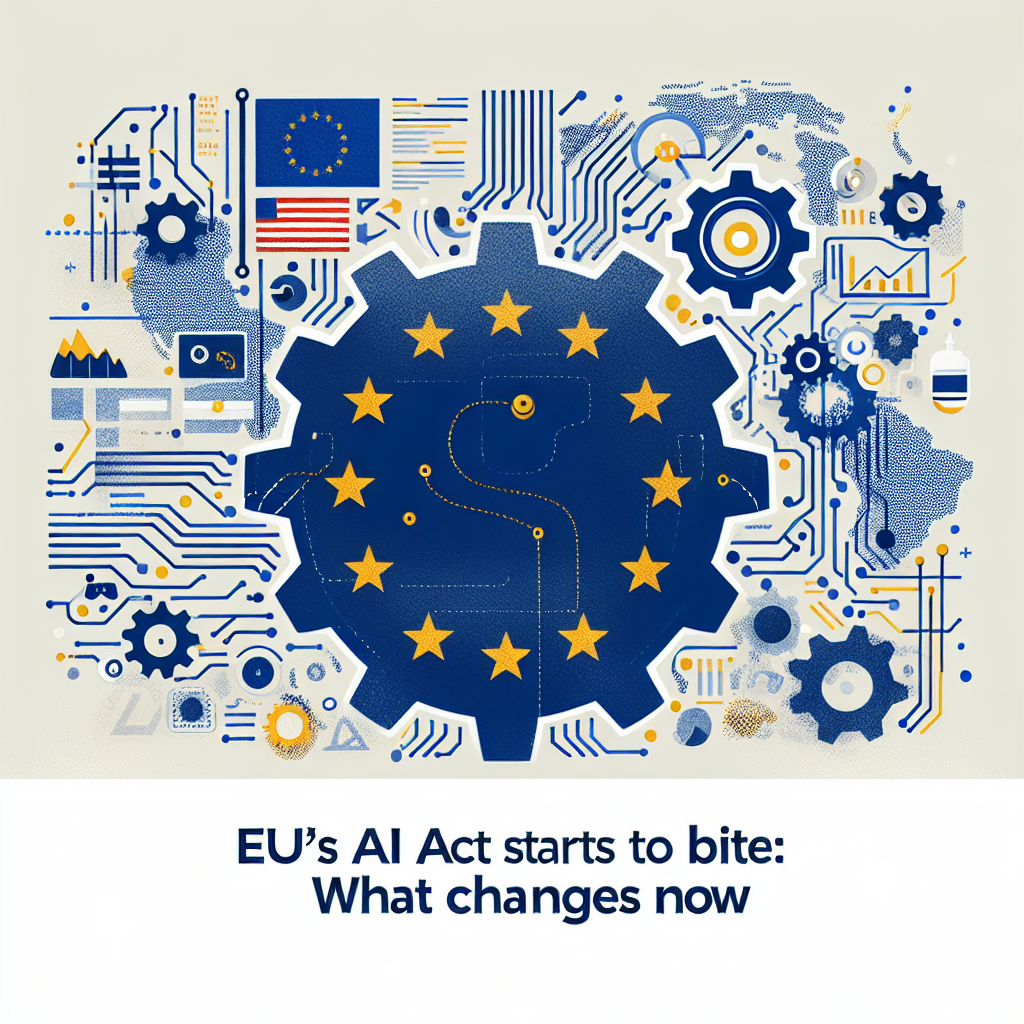
Europe’s Artificial Intelligence Act is moving from legislation to implementation. The law, adopted in 2024, sets out a risk-based framework for how AI may be developed and used in the European Union. Its impact will extend far beyond Europe. Any company that places AI systems on the EU market, or whose AI outputs are used in the bloc, will need to align with the rules. This shift will shape product design, procurement, and governance in 2025 and beyond.
Officials and industry expect a phased rollout. Some prohibitions take effect first, followed by obligations for high-risk systems and general-purpose AI. The goal is to set clear expectations for safety and transparency, while leaving room for innovation. Supporters say it will build public trust. Critics warn of costs and complexity. Both are preparing for change.
What the law does
The EU AI Act sorts systems by risk. The higher the risk, the stricter the rules. It also creates specific duties for powerful general-purpose models.
- Bans on certain practices: The Act prohibits AI uses seen as unacceptable. These include social scoring by public authorities. It also restricts real-time remote biometric identification in public spaces, with narrow exceptions and strong safeguards.
- High-risk AI obligations: AI used in critical areas faces strict controls. These areas include infrastructure, education, employment, access to essential services, law enforcement, migration, and justice. Providers must establish risk management, data governance, human oversight, and cybersecurity. They need to keep logs, document design decisions, and undergo conformity assessment. They must monitor systems after they are placed on the market and report serious incidents.
- General-purpose AI (GPAI): Developers of broad, foundational models must meet transparency and risk management duties. They should provide information to downstream deployers, publish summaries of training data sources, and put policies in place to respect copyright. For the most capable models, extra measures to assess and mitigate systemic risks may apply.
The Act builds on the EU’s product safety approach. It relies on standards, documentation, and audits. National authorities will supervise compliance, with support from new coordination bodies at the EU level. Penalties can be significant for serious breaches.
Why it matters outside Europe
AI is global. A chatbot trained in one country can be integrated into services in another. The EU law reaches providers and users whose systems are offered in the EU or whose outputs are used there. Many firms will choose to align their global products with the strictest common denominator to avoid building region-specific versions. That could set a de facto global baseline.
Other governments are moving too. The United States issued an executive order in 2023 directing agencies to address AI risks and to develop testing and reporting practices. The United Kingdom held an AI Safety Summit in 2023 and launched a national safety institute. The G7 endorsed nonbinding guidelines for advanced AI. These efforts differ in form, but they share themes: transparency, testing, incident reporting, and accountability.
Standards bodies also play a role. European and international standards groups are drafting technical guidance to operationalize the Act’s requirements. Companies will watch these closely. Standards can provide a clear path to compliance.
How companies are preparing
Firms are not waiting for deadlines. They are setting up governance, updating processes, and mapping where AI sits in their products and services.
- Inventory and classification: Teams are cataloging AI systems and classifying them by risk. This includes checking whether a model is used in decisions that affect people’s rights or access to services.
- Risk management: Providers are adopting lifecycle risk processes. That includes pre-deployment testing, bias and performance evaluation, and human oversight plans. Many are expanding internal “red teaming” to probe models for failure modes.
- Documentation: Product teams are writing technical files, data sheets, and user instructions. They are keeping logs to support traceability and audit.
- Copyright and data governance: Developers of general-purpose models are building procedures to honor text and data mining opt-outs under EU law. They are preparing “sufficiently detailed” summaries of training data sources for transparency.
- Incident response: Organizations are setting up channels to report and address serious incidents. They are training staff on when and how to notify authorities.
Many companies are also aligning with voluntary frameworks. The U.S. National Institute of Standards and Technology wrote that “AI risk management is a socio-technical challenge,” emphasizing the need to consider human, organizational, and technical factors. Its AI Risk Management Framework offers profiles and controls that firms can adapt to different contexts.
Expert views and industry signals
Debate over the new rules is lively. Some academics and civil society groups argue that binding obligations are overdue. They point to harms from biased systems and opaque automation. Business groups say clarity is welcome, but warn about costs for smaller firms and open-source communities.
Frontier model developers have signaled support for responsible practices while raising practical questions. OpenAI’s charter says its mission is “to ensure that artificial general intelligence benefits all of humanity.” Model makers also note that transparency requirements must protect security and trade secrets. They seek guidance on how to summarize training data sources without exposing personal data or confidential materials.
Regulators say they aim to balance innovation and safeguards. They plan to issue guidance, host sandboxes, and work with standards bodies. Coordination among national authorities will be key to consistent enforcement.
Key challenges ahead
- Defining and measuring risk: Firms need practical metrics for “systemic” or “high” risk, and agreed testing methods. Harmonized standards will help, but will take time.
- Supply chain complexity: Many AI products stack components from different providers. Responsibilities must be clear between model developers, integrators, and deployers.
- Documentation burden: Producing complete, current documentation is hard in fast-moving projects. Automation and tooling can ease the load, but teams need training.
- Copyright compliance: Respecting EU text and data mining rules requires new content management workflows. Publishers are testing opt-out mechanisms. Developers are updating data pipelines.
- Global alignment: Firms operating in multiple jurisdictions must map overlapping and divergent rules. They may build a core compliance program and add local modules.
What to watch in 2025
Several milestones will shape the year. The Commission and standards organizations are expected to publish more guidance and technical specifications. National authorities will set up or expand supervisory teams. Regulatory sandboxes will open to help startups and public bodies test AI under supervision. Sector regulators in finance, health, and transport will issue their own AI notices.
Courts will also play a role. Ongoing copyright cases and consumer protection disputes will clarify how existing laws apply to AI. Procurement rules for public-sector AI will tighten. New reporting channels will make incidents more visible, improving learning but also raising legal risk for firms that fall short.
For many organizations, 2025 will be about building muscles: governance, testing, documentation, and response. The companies that do this well will not only reduce regulatory risk. They may also gain an edge in trust and reliability, which matters to customers and partners.
The bottom line
The EU AI Act is set to change how AI is built, sold, and used. Its risk-based approach blends bans, obligations, and transparency. The details are technical, but the direction is clear: safer, more accountable systems, backed by documentation and testing. The law will not solve every AI problem. It will not end debate over innovation and control. But as the rules take hold, they will push the industry toward clearer standards and shared practices. That shift could make AI more predictable for developers and safer for society.