





























































































































































































































































































Europe’s AI Law Sets Global Test for Regulation



EU ushers in first comprehensive AI rulebook
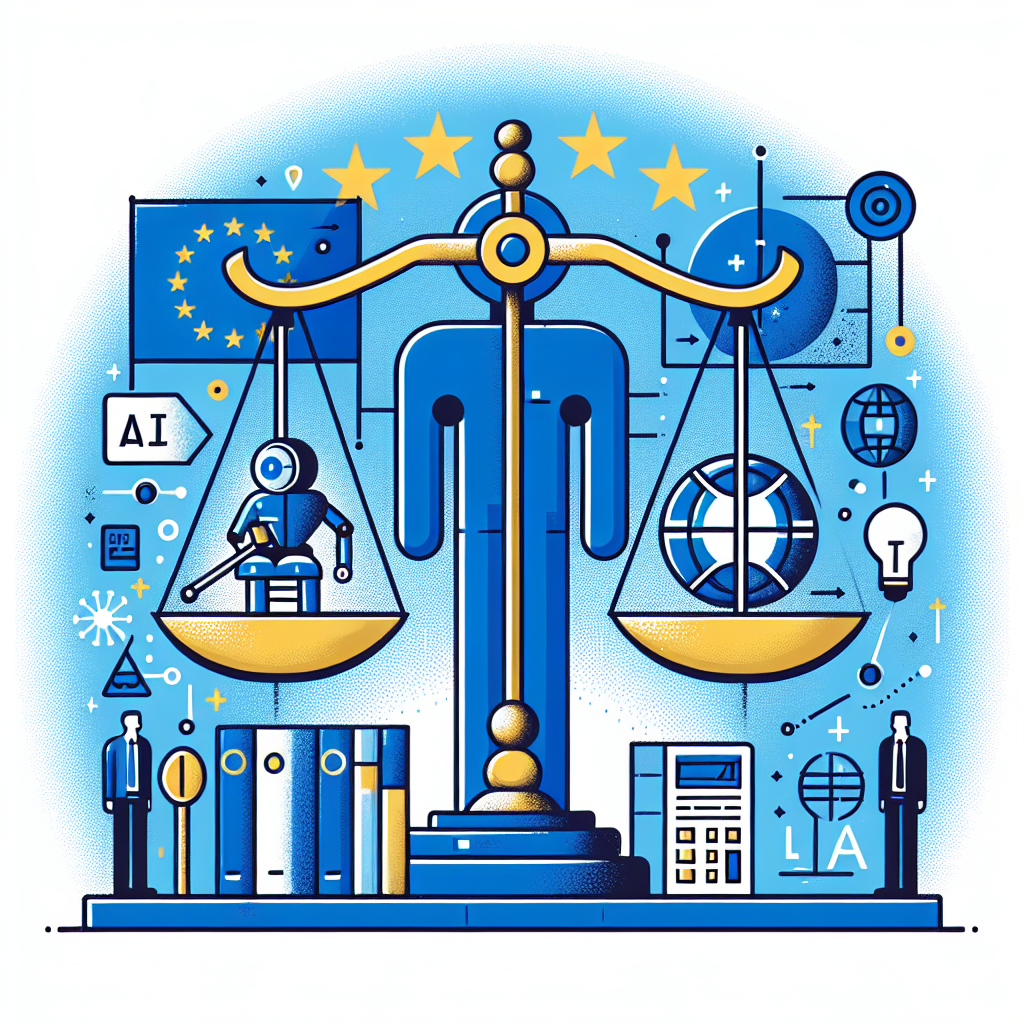
Europe has adopted the world’s first broad law to regulate artificial intelligence, setting a template that could shape how AI is built and used far beyond the continent. The Artificial Intelligence Act, approved in 2024 after years of negotiation, introduces a risk-based approach to governing the technology. It places strict obligations on high‑risk systems, requires transparency from general‑purpose AI models, and threatens steep fines for violations.
The European Commission describes the goal in clear terms: “The AI Act aims to ensure that AI systems placed on the EU market and used in the EU are safe and respect fundamental rights and EU values.” Supporters say the law balances innovation with safeguards. Critics warn that compliance costs could burden startups and slow research. Either way, companies developing or deploying AI will need to adjust.
How the AI Act works
The law classifies AI tools by the risk they pose to people and society. Obligations scale with that risk. Officials say this design aims to minimize harm without blanket bans on useful applications.
- Prohibited uses: Certain practices are outlawed, such as social scoring by public authorities and some forms of biometric categorization that use sensitive traits. Law enforcement use of real‑time remote biometric identification in public places is tightly restricted and limited to defined exceptions.
- High‑risk systems: AI used in sensitive areas—like critical infrastructure, education, employment, essential services, law enforcement, migration, and justice—must undergo conformity assessments, maintain detailed documentation, ensure human oversight, and meet quality and cybersecurity standards.
- Limited‑risk tools: Systems such as chatbots and content generators face transparency duties. Users must be told they are interacting with AI, and AI‑generated media, including deepfakes, must be labeled.
- Minimal‑risk applications: Most AI tools, like spam filters or game AI, face no additional obligations under the Act.
One of the most closely watched sections covers general‑purpose AI (GPAI), including large models that power chatbots and code assistants. Providers of such models must prepare technical documentation, disclose information about training data in the form of a summary, and adopt measures to address foreseeable risks. For the most capable models—those that could create systemic risks—requirements are more stringent, including robust testing, incident reporting, and heightened cybersecurity and compute safeguards.
Penalties are significant. For the gravest violations, fines can reach the higher of tens of millions of euros or up to 7% of a company’s global annual turnover. Lesser infringements carry proportionate but still material penalties. The law will phase in over time: some bans and transparency obligations apply within months, while full high‑risk requirements arrive after a longer transition period to allow companies to adapt.
Why this matters beyond Europe
Like the EU’s privacy law (GDPR), the AI Act is expected to have effects worldwide. Any company that sells AI systems into the EU, or uses them in the Union, will need to comply. Many firms may choose to apply EU standards globally to simplify development and reduce legal risk. That could influence product design, documentation practices, and safety testing for AI providers from San Francisco to Seoul.
The law also arrives amid a global push to set AI guardrails. In 2023, the White House issued an Executive Order calling for AI that is “safe, secure, and trustworthy”. The UK hosted a safety summit focused on frontier models. The G7 launched a code‑of‑conduct process. Meanwhile, the US National Institute of Standards and Technology published a voluntary risk management framework to help organizations identify and mitigate AI hazards. The EU Act adds binding rules to that landscape, and regulators elsewhere are watching closely.
Industry and civil society reactions
Large tech companies publicly back the idea of clear rules, even as they lobby on details. At a 2023 U.S. Senate hearing, one AI leader put it bluntly: “We think that regulatory intervention by governments will be critical.” That sentiment reflects growing concern about the speed and scale of AI deployment, and a desire for consistent standards across markets.
Startups and researchers express mixed views. Many welcome clarity on expectations, particularly around testing and documentation. Others fear compliance burdens may favor the biggest companies. The rules for GPAI models—such as requirements to summarize training data and evaluate systemic risks—are seen by some as costly for smaller labs. EU officials counter that the law contains proportionality measures and sandboxes designed to help small and mid‑sized firms experiment under supervision.
Digital rights groups applaud provisions that curb intrusive surveillance and require labeling of AI‑generated media. They also point to gaps and enforcement challenges. Campaigners want strong oversight of biometric technologies, transparency on datasets, and meaningful avenues for redress when AI systems cause harm. Lawyers note that much will depend on how the European Commission, national regulators, and courts interpret key terms, certify standards, and investigate complaints.
What changes for businesses
Companies building or deploying AI in the EU will need to map their systems against the Act’s categories and prepare evidence that they meet obligations. That likely means new teams and processes across product, legal, and security functions.
- Governance: Establish clear ownership for AI risk, with policies for data governance, human oversight, and incident response.
- Documentation: Maintain technical files, risk assessments, and testing records, especially for high‑risk systems and GPAI models.
- Transparency: Implement user disclosures, content labeling for synthetic media, and accessible model information.
- Supply chain: Vet third‑party models and datasets; ensure contractual terms support compliance.
- Monitoring: Track model performance post‑deployment and report serious incidents to authorities as required.
Standards bodies are preparing detailed specifications to help. Harmonized European standards and international guidance are expected to translate legal principles into technical controls. Until then, organizations may rely on existing best practices, including NIST’s risk management framework, ISO/IEC AI standards, and internal red‑teaming and evaluation protocols.
What to watch next
The EU and member states must now build the machinery to enforce the law. That includes designating national market surveillance authorities, setting up an EU‑level office to oversee general‑purpose models, and accrediting notified bodies to assess high‑risk systems. The Commission is expected to publish guidance and codes of practice to clarify gray areas. Early enforcement actions—such as warnings or fines—will signal how aggressive regulators intend to be.
- Timelines: Prohibitions and some transparency rules take effect first; comprehensive duties for high‑risk systems follow after a longer transition.
- Standards: Technical standards from European and international bodies will shape how companies demonstrate compliance.
- Legal tests: Court cases and complaints will define boundaries, from what counts as “high‑risk” to how to label AI‑generated media in practice.
- Global spillover: Other jurisdictions may adopt similar measures or mutual‑recognition schemes, creating a patchwork—or a pathway to convergence.
The bottom line
The EU’s AI Act is a bet that clear rules can steer a powerful technology toward public benefit while curbing abuse. It is both a legal framework and a signal to the market. As AI systems spread into critical decisions and daily life, the stakes are high. Supporters see a chance to build trust and set common expectations. Skeptics warn of red tape and uneven enforcement. In the months ahead, how Europe implements the law—and how companies respond—will offer the first real test of whether this approach can work at scale.