










































































































































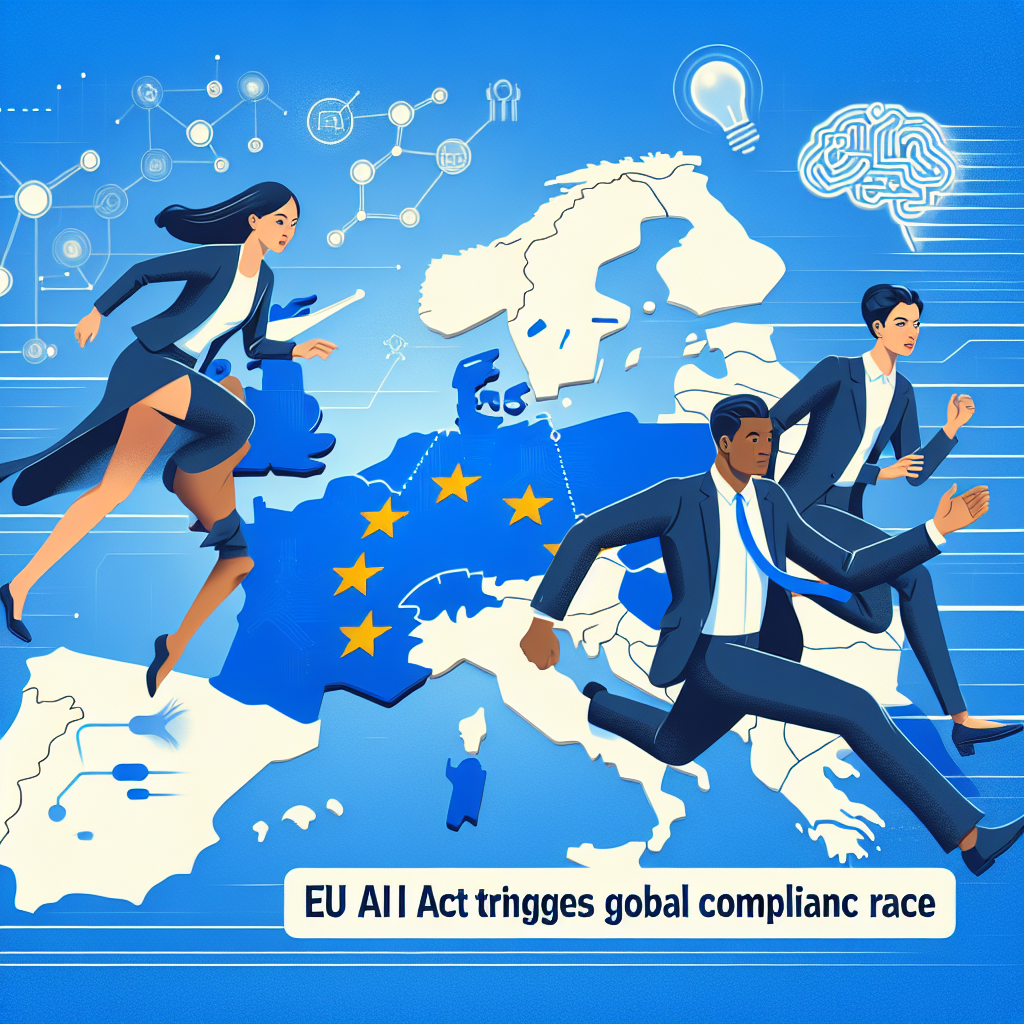





















































































EU AI Act Spurs Global Compliance Race



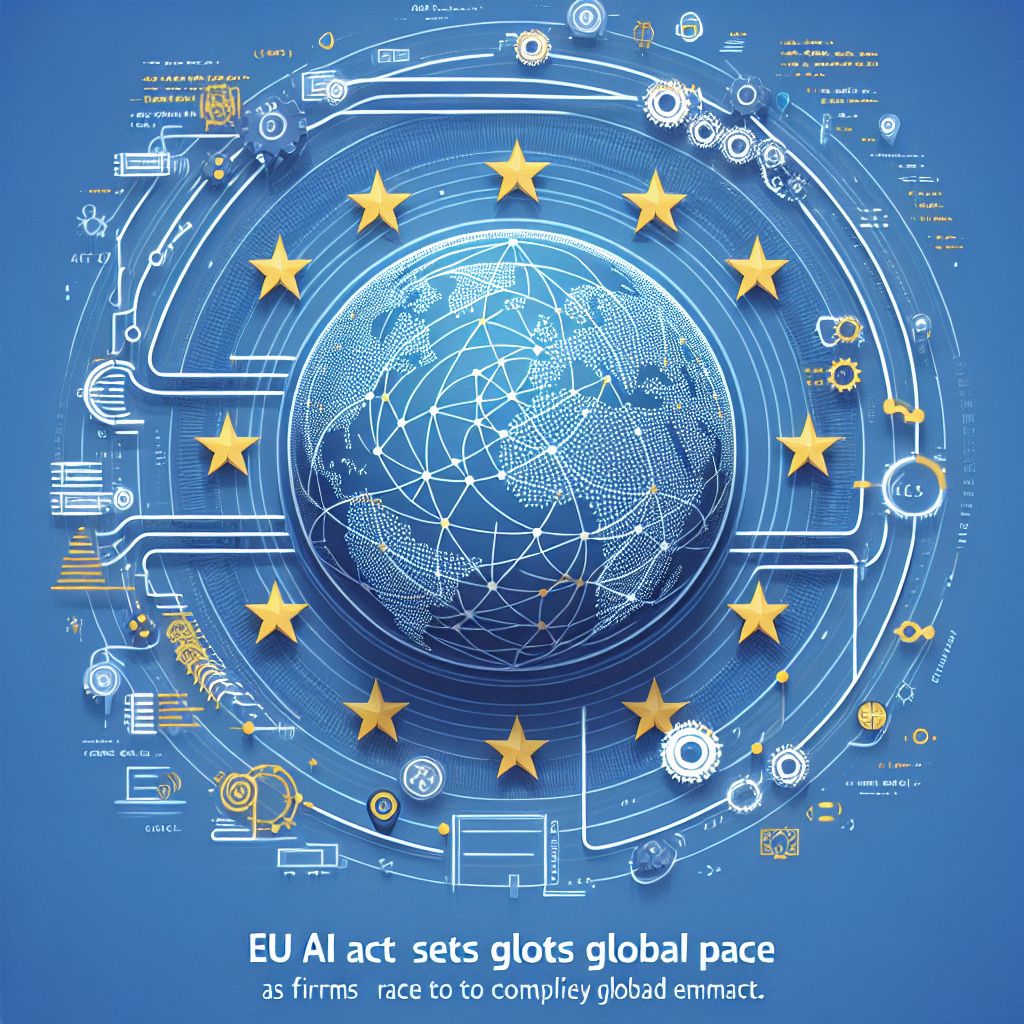
Businesses around the world are preparing for sweeping new rules on artificial intelligence as the European Union’s AI Act moves from legislation to implementation. The law, adopted in 2024, sets out risk-based obligations for AI systems and is being phased in over the next few years. Regulators in the United States, the United Kingdom, and Asia are moving in parallel, creating a patchwork that large and small companies must navigate.
What the EU law does
The EU AI Act is widely described by European lawmakers as “the world’s first comprehensive AI rules”. It establishes a tiered approach. Some uses are banned. Others are subject to strict controls. Lower-risk systems face transparency requirements.
Under the law:
- Prohibited practices include social scoring by public authorities and certain types of biometric surveillance, with narrow public safety exceptions defined in the text.
- High-risk systems — such as AI used in hiring, education, critical infrastructure, law enforcement, and medical devices — must meet requirements for data governance, documentation, human oversight, robustness, and cybersecurity.
- General-purpose AI (GPAI) and foundation models face transparency and technical documentation duties. Providers must share key information with deployers and, for the most capable models, assess systemic risks.
Most obligations will apply after a transition period. Bans take effect earlier, while the strictest high-risk rules come later. The staggered timeline gives regulators time to issue guidance and companies time to adapt. But it also creates uncertainty for product teams planning roadmaps in 2025 and 2026.
Why this matters beyond Europe
The EU market is large. Companies that sell or operate AI systems in the bloc will have to comply, even if they are based elsewhere. Multinationals tend to adopt a single compliance program across regions to avoid fragmentation. That is why the EU AI Act is shaping corporate standards far beyond EU borders.
Other jurisdictions are moving too:
- In the United States, the National Institute of Standards and Technology (NIST) published the AI Risk Management Framework (AI RMF 1.0) in 2023 as “voluntary” guidance. Federal agencies are referencing it in procurement and oversight.
- President Joe Biden’s 2023 Executive Order on the “Safe, Secure, and Trustworthy Development and Use of Artificial Intelligence” directs agencies to develop safety tests for advanced models, bolster privacy protections, and manage AI risks in critical sectors.
- The United Kingdom has taken a regulator-led approach, issuing cross-sector principles and hosting the 2023 AI Safety Summit. Sector regulators are expected to publish more detailed guidance.
- China has adopted rules for recommendation algorithms and generative AI, focusing on content management, security assessments, and provider registration.
These efforts differ in scope and enforcement. But they are converging on similar themes: transparency, accountability, risk assessment, and human oversight.
What companies are doing now
Legal and technology teams are starting with inventories and risk assessments. Many are using existing privacy and product safety processes as a base and adding AI-specific checks.
- Map AI systems and vendors. Catalog where AI is built or deployed, including third-party and open-source models. Identify intended use, users, and affected individuals.
- Classify risk. Align use cases to EU categories. Hiring, education, and safety-critical uses often fall under high-risk. Consumer chatbots and content tools typically face lighter transparency duties.
- Set up governance. Define accountability. Many firms establish an AI oversight committee spanning legal, security, engineering, product, and ethics roles.
- Document and test. Keep technical documentation, data lineage, and evaluation results. Stress test systems for bias, robustness, and privacy leakage. Red-team high-impact models.
- Embed human oversight. Add human-in-the-loop reviews where required. Train staff on escalation paths and incident response.
- Align to standards. Map controls to NIST AI RMF functions (govern, map, measure, manage) and to emerging certifications such as ISO/IEC 42001 for AI management systems.
Security teams warn that model supply chains can be opaque. Documentation from model providers is improving but uneven. This is a friction point for compliance, especially for foundation models and APIs integrated into products.
Supporters and skeptics
Supporters of the EU approach say rules will build trust. Consumer groups in Europe have pushed for limits on biometric surveillance and for clearer accountability in automated decisions that affect jobs and services. Advocates argue that a risk-based system gives companies flexibility while setting guardrails for the most sensitive uses.
Startups and some enterprise developers worry about cost and complexity. They ask for clear templates, practical testing methods, and realistic timelines. They warn that overly prescriptive rules could slow innovation or entrench incumbents with large compliance teams.
The debate is not only European. In 2023, the Center for AI Safety published a one-sentence statement signed by industry and academic leaders: “Mitigating the risk of extinction from AI should be a global priority alongside other societal-scale risks such as pandemics and nuclear war.” That line captures the scale of concern among some researchers. Others caution against sensationalism, emphasizing present-day risks like bias, misinformation, and safety failures in consumer and workplace tools.
Enforcement and capacity
Europe is building new enforcement structures. National authorities will supervise most applications, while a central EU-level body will coordinate. The law includes fines for non-compliance that can reach significant percentages of global turnover for the worst violations. Regulators will need technical talent to audit complex systems. Universities and standards bodies are working to create test methods that can translate broad legal terms into measurable controls.
Enforcement in other countries will vary. In the U.S., sector regulators such as the Federal Trade Commission and the Food and Drug Administration are applying existing consumer protection and safety laws to AI. They have signaled that deceptive AI claims and unsafe deployments will face scrutiny, even without new legislation.
What to watch in 2025
Companies, developers, and policymakers are tracking several milestones:
- Guidance and codes. The European Commission is expected to issue interpretive guidance and support codes of practice for general-purpose AI. Industry groups are drafting playbooks for testing and documentation.
- Standards. Work at ISO/IEC, CEN-CENELEC, and NIST on technical benchmarks for robustness, transparency, and bias will be key to practical compliance.
- Procurement signals. Large buyers — including governments and banks — are adding AI clauses to contracts. These often require risk assessments, model cards, or incident reporting.
- Labeling and disclosures. Expect more visible disclosures for AI-generated content and chatbots, as transparency rules and platform policies tighten.
- Talent and tooling. Demand is rising for AI risk, policy, and evaluation roles. New tools are emerging for dataset governance, red-teaming, and model monitoring.
The bottom line
The regulatory direction is clear. AI governance is moving from voluntary pledges to enforceable rules. The precise requirements still need to be translated into checklists, tests, and audits that engineers can run and product teams can ship. Companies that start with a solid inventory, clear accountability, and measurable evaluations are better placed to adapt as guidance arrives.
For all the debate, one point draws broad agreement. Safe and trustworthy AI requires more than code. It needs governance, documentation, testing, and people empowered to say when a system is ready — or not. As one NIST brief puts it, the goal is “trustworthy AI”. The EU AI Act is accelerating the search for practical ways to get there.